Why Your Devices Age Faster Than You Think
Mar 2, 2026
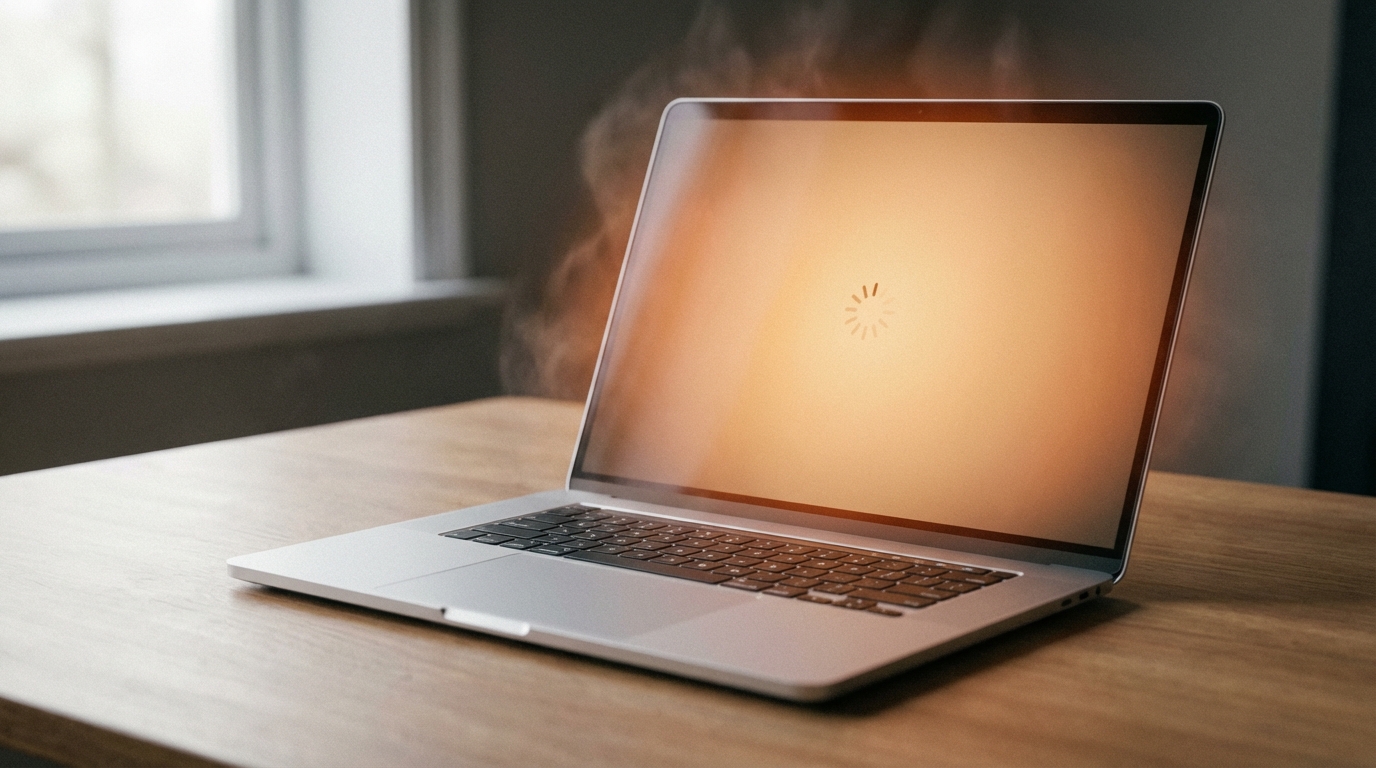
In November 2024, I replaced a five-year-old 16-inch Intel MacBook Pro, notorious for loud fans, with an M4 Pro Mac mini. Silent. Fast. A few months later I added a MacBook Air M4 for portability.
The difference wasn't incremental. It was a different category of machine.
Apps didn't open. They appeared. Compilation jobs that used to take forty seconds finished in eight. I could run a local dev server, a browser with thirty tabs, Slack, and VS Code simultaneously and the machine didn't flinch. My old Intel MacBook Pro would have been screaming.
For the first time in years, I wasn't waiting for my computer. It was waiting for me.
That was about sixteen months ago.
After the Liquid Glass redesign1 and as Apple Intelligence expanded in macOS, I noticed something familiar. A pause here. A stutter there. Not dramatic. The kind of friction you don't clock in a day but can't ignore over a week. My M4 Pro Mac mini, the machine that felt limitless a year ago, had developed a hesitation.
Maybe it's my imagination. But I checked Activity Monitor. Memory pressure drifted toward yellow over a week, and swap stopped being near zero with the same browser and VS Code workload. I've been in software long enough to know what that means. And it changed how I think about every device I own.
It's Not One Thing
The standard explanation is that companies design devices to die. Not in the simple, cartoon-villain way people mean. But the real explanation is worse, because you can't blame anyone for it.
There are forces aging your devices right now. Software gets heavier every year. Developers build for current hardware, not yours. Batteries lose capacity with every charge cycle, often around 80% by 500 to 1,000 cycles depending on the model.2 The people around you upgrade, and the apps and services they use start assuming their hardware, not yours.
None of these are new. They've been true for a decade.
What's new is what happens when they stack.
The Compounding Problem
Each force makes the others worse.
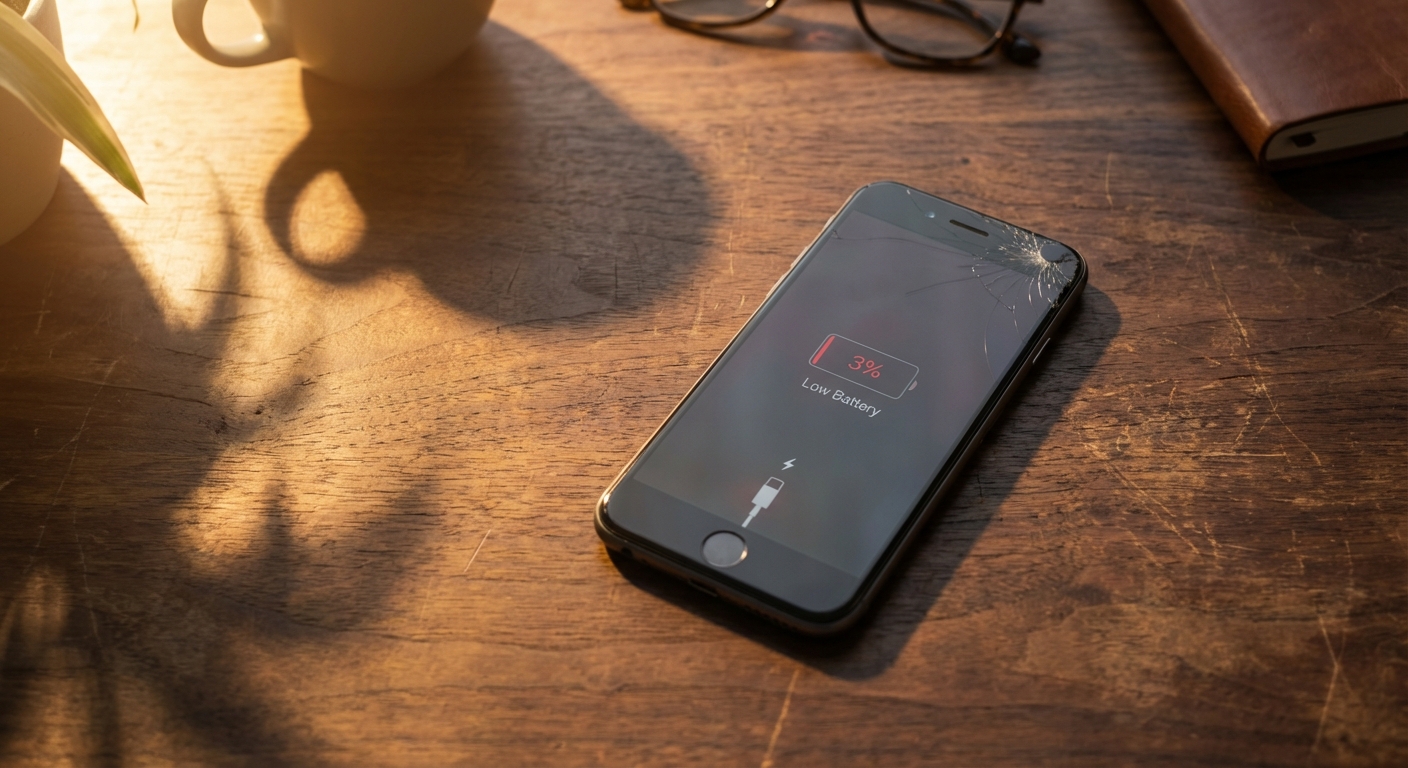
Take your phone. Heavier software drains a degrading battery faster. A phone that used to last until dinner now dies at 3 PM. To prevent shutdowns, the OS may manage peak performance as the battery ages. Apple faced lawsuits over how this was communicated, including a class-action settlement reported as up to $500M.3 So now you have heavier software running on a throttled chip powered by a dying battery.
That's three forces multiplying, not adding.
Then your friends upgrade. The group chat gets richer media. Instagram assumes a better GPU. The new features everyone else is using require the processing power you no longer have. The floor moves up while your hardware stays fixed.
On a desktop like my Mac mini, battery isn't the issue. But the other forces still compound. Every macOS update is built for the latest chip. Every app update assumes more memory. The OS itself gets heavier with each visual overhaul.
This is why the decline feels sudden. It's not that your device gets 5% worse each year for four years. It's that the forces interact. They compound. Year one is barely noticeable. Year two feels like a slow fade. Year three hits like a wall, because by then you're running software built for hardware two generations ahead on a system that hasn't changed since you bought it.
Compound interest works the same way. The first few years are boring. Then the curve bends.
The Ratchet
Every force I just described has been around for a decade. If that were the whole story, replacement cycles would stay roughly the same. In my experience, they did. Three to four years, give or take.
But something changed in the last eighteen months.
AI moved onto the device.
Apple Intelligence. Google Gemini Nano. Samsung Galaxy AI. Major manufacturers are now shipping machine learning models that run directly on your device's processor. Not just in the cloud, but on the chip in your hand or on your desk.
This is what I'm feeling on my Mac mini. Apple Intelligence had just started rolling out when I bought it in November 2024. Basic writing tools, notification summaries, and early assistant features. Now it's woven deeper into the operating system. Writing Tools, image generation, and deeper assistant features.4 Each macOS update pushes the models further. My 24GB of unified memory that felt abundant a year ago is now shared between the apps I'm running and the AI features layered into the OS.
On-device AI is not like a heavier app. It's a new category of demand. More of the OS now includes on-device models and AI-assisted features. Some are user-invoked, some run in the background, and either way the baseline resource ceiling rises each release.
This is a hardware tax that didn't exist two years ago.
And here's the compounding part. AI features get more capable every OS update. The models get larger. The features get deeper. The hardware requirement ratchets up with every cycle. A device that handles Apple Intelligence fine today will struggle with next year's version, because the model will be bigger and the tasks will be more complex. On phones, the battery will have another 365 cycles of degradation on top of it.
The three-to-four-year replacement cycle held because the forces were predictable. AI broke that. It's a new variable multiplying against all the existing ones.
What You Can Do (Before You Upgrade)
- Check battery health and cycle count on both phones and laptops.
- Watch swap and memory pressure trends across a normal week, not one moment.
- Audit login items and background agents.
- Keep 15 to 20% disk free so swap has room when pressure spikes.
- Disable AI features you do not use (where possible), or limit them to when you want them.
What This Means
I don't think replacement cycles stay at three to four years. Not with on-device AI advancing at this pace. The gap between what the latest OS demands and what year-old hardware can deliver is growing faster than it ever has.
Notice what Apple, Google, and Samsung are marketing as the reason to upgrade now. Not cameras. Not screens. Not speed. AI. Look at any product page: "Built for Apple Intelligence," "Galaxy AI," "Gemini built in." It's the first feature in a decade that genuinely requires new hardware every cycle.
My Intel MacBook Pro lasted five years before it felt truly slow. I'd bet my M4 Pro Mac mini won't make it to three before the next macOS makes it feel the same way. Not because Apple designed it to fail. Because the math changed.
In day-to-day work, I feel small delays before I can benchmark them. I remember when this class of task took much longer on Intel. That's the curve. You don't notice the bend until you're on it.
Your devices used to age by wear. Charge cycles, scratched glass, outdated apps. Predictable decline over predictable years.
Now they age by compound interest. And AI just raised the rate.
Pranoy Tez
Footnotes
-
Apple newsroom on Liquid Glass design: https://www.apple.com/newsroom/2025/06/apple-introduces-a-delightful-and-elegant-new-software-design/ ↩
-
Apple iPhone battery and performance: https://support.apple.com/en-us/101575 ↩
-
Verge coverage of class-action settlement reported up to $500M: https://www.theverge.com/2020/3/2/21161271/apple-settlement-500-million-throttling-batterygate-class-action-lawsuit ↩
-
Apple Intelligence Writing Tools on Mac: https://support.apple.com/guide/mac-help/find-the-right-words-with-writing-tools-mchldcd6c260/mac ↩