What AI Can't Do Yet (Part 1: Atoms)
Feb 18, 2026
Series: What AI Can't Do Yet
- Part 1: Atoms
- Part 2: The Khosla Scorecard
It was 11 PM on a Tuesday. AI had helped me write production code, debug a pipeline, and draft a content strategy. I had shipped more in one day than used to take a week.
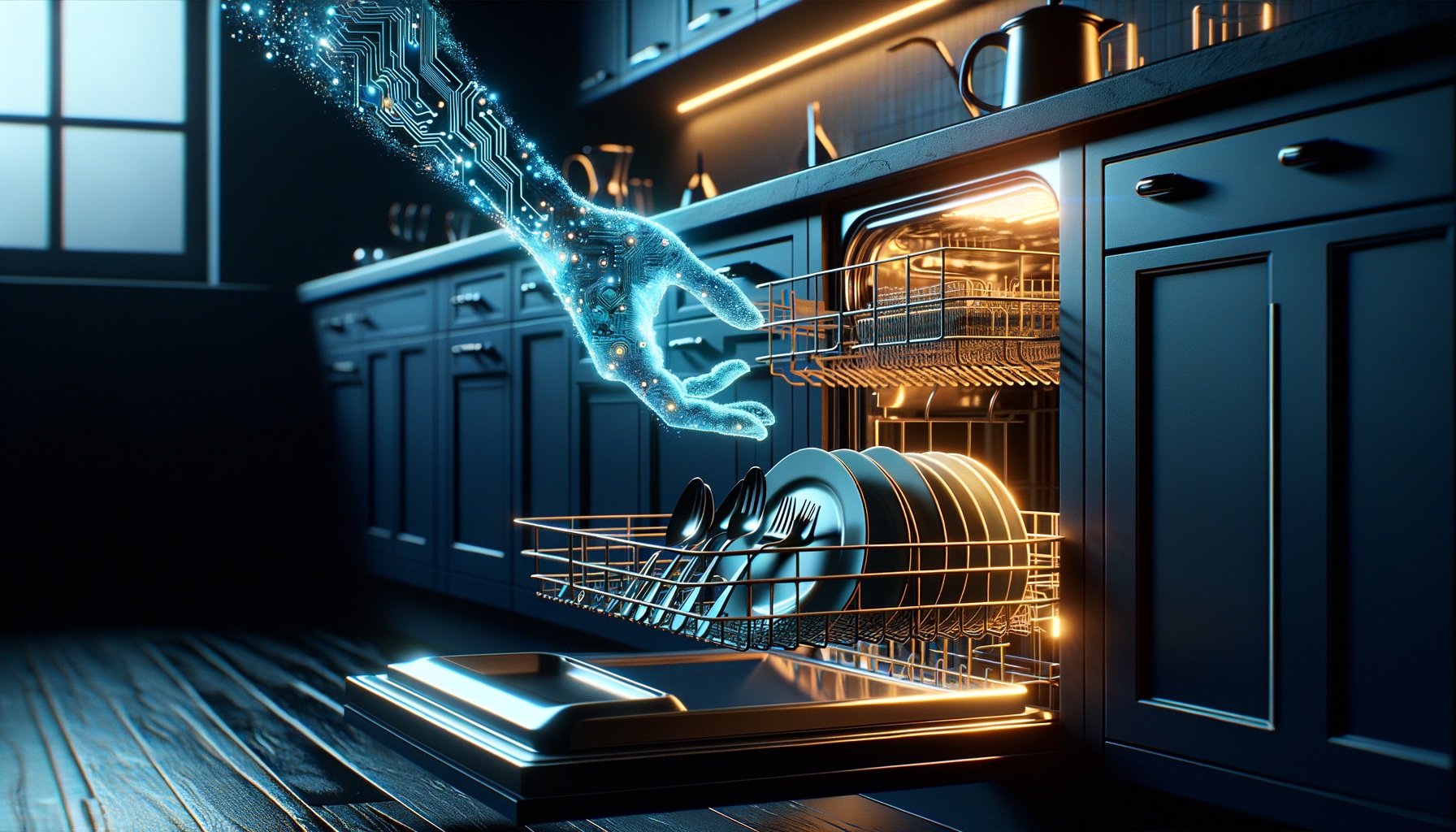
The dishwasher still needed loading.
The List
AI is a digital genius and a physical infant. Here are five simple tasks it still cannot do in your home.
Load the dishwasher. AI can write the software for a dish-loading robot. It still cannot walk into your kitchen and reliably move plates, bowls, and sharp objects without breaking something. Humanoid robots have shown impressive manipulation demos in controlled settings. The $500 consumer appliance that does this every day does not exist.
Fold laundry and put it away. A demo folding one shirt on a flat surface is not your Sunday pile of mixed fabrics, tangled sleeves, and half-open drawers. The hard part is not knowing how to fold. The hard part is handling variability, identifying where each item belongs, and finishing the job.
Cook a meal from raw ingredients. AI can generate recipes and adapt to what is in your fridge. It still cannot dice onions, manage heat, react to smells and textures, and stay safe around knives and open flames in a real kitchen.
Fix a leaky faucet. AI can diagnose and guide you step by step. It still cannot shut off the valve, disassemble hardware, and reassemble it cleanly without cross-threading or leaking.
Take out the trash. A ten-year-old can do this after being shown once. A home robot must grip, navigate, handle awkward loads, and deal with edge cases like ripped bags and slippery floors. No consumer robot does this end-to-end.
Why the last 10% is brutal
Robotics fails in homes for boring reasons, not sci-fi reasons.
- Messy environments: every kitchen is different. Objects are stacked weirdly. Lighting changes. Things slip.
- Safety and liability: glass, knives, kids, pets, wet floors. A 0.1% failure rate is unacceptable at home.
- Reliability at scale: a stage demo is 10 minutes. A household product is 10,000 repetitions with near-zero errors.
The Pattern
Every item on this list is the same problem: physical manipulation in an unstructured environment.
AI dominates where the bottleneck is intelligence. It stalls where the bottleneck is atoms: gripping, navigating, sensing, and adapting to physical variability in real time.
Robotics companies know this, and investment is pouring in. But even when the capability exists, the first consumer-grade robots will be expensive. A $50,000 to $100,000 robot is not a household appliance. The real unlock is when a reliable helper costs closer to $5,000.
The Expiration Date
Every item on this list has a countdown.
My working guess: the technical capability for many household tasks arrives in the next three to five years. Mass-market affordability likely takes longer, closer to a decade, because reliability, safety, supply chains, and regulation move slower than model releases.
The pattern is consistent: capability arrives before the product, and the product arrives before the affordable product.
If you remember one thing, remember this.
Bits move fast. Atoms move slow. Institutions move slowest.
Next, I used this lens to score Vinod Khosla's 12 predictions. The split is exactly what you would expect.
Read Part 2: Vinod Khosla's AI Scorecard
The dishwasher will load itself. The question is not whether. The question is when you can afford it.
Pranoy Tez