The Invisible Hand: Why Markets Know More Than You Do
Feb 17, 2026
I spent 7 years as an engineer understanding systems. Inputs, outputs, deterministic logic. I could read a stock chart, name a few tickers, repeat "buy low, sell high" like everyone else.
But I never understood why markets actually work. I knew the surface. I had no idea what was underneath.
Then my MBA introduced me to the invisible hand, and public markets finally clicked.
The Idea That Made It Click
Adam Smith popularized "the invisible hand" in the 18th century (it appears in 1759 and again in 1776). It is one of those concepts that everyone references and almost nobody thinks about deeply. The standard explanation goes something like this: millions of self-interested participants, each acting on their own information and incentives, collectively produce outcomes that no single participant planned or could have predicted.
That is the textbook version. Here is the version that actually changed how I see public stock markets.
Think about what happens every second on the NYSE or NASDAQ. Millions of decisions, buy, sell, hold, wait, aggregated across time. Each decision carries information. The sum of all those decisions carries more information than any individual decision-maker has access to. That is the core insight.
And it has consequences that most people, including me before that class, completely ignore.
Same Data. Opposite Conclusions.
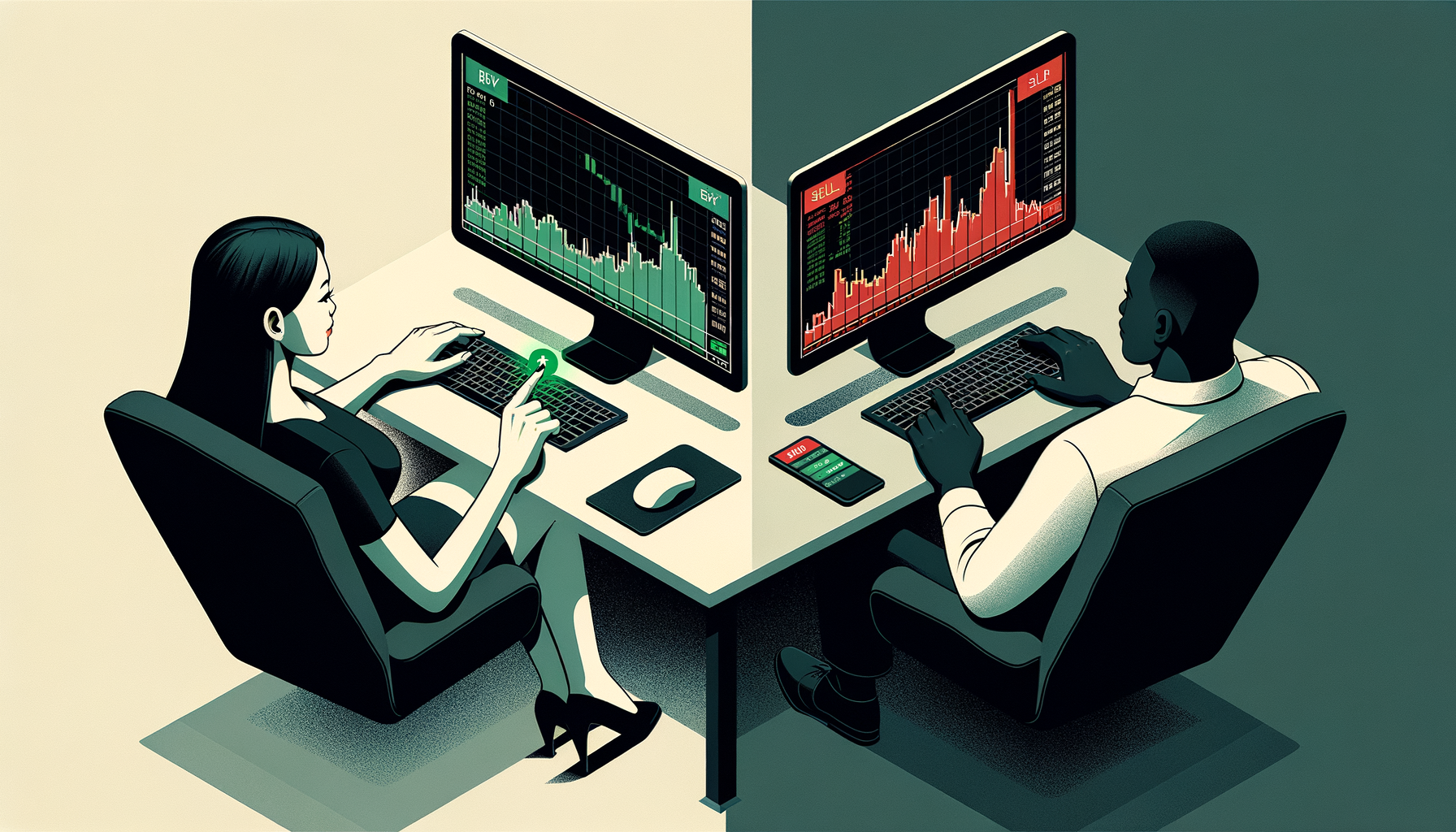
Here is what makes public markets genuinely fascinating. Every participant has access to the same data. Quarterly earnings. Revenue growth. Debt ratios. Insider transactions. Macro indicators. Fed minutes. It is all public. Disclosure rules and regulators exist to keep markets fair and information broadly available.
Same data. Same access. Wildly different conclusions.
One fund manager reads Apple's earnings and buys. Another reads the same report and sells. A third reads it and does nothing. All three believe they are being rational. At least two of them are wrong. And here is the uncomfortable part: you cannot tell which two until months later. Sometimes years.
This is the paradox: transparency does not produce agreement. It produces liquidity.
The fact that smart, informed, incentivized people disagree is what makes the market work. If everyone agreed, there would be no trades. No trades means no price discovery. No price discovery means no market.
Disagreement is not a bug. It is the entire mechanism.
Rational. Irrational. Both.
The efficient market hypothesis says prices reflect all available information. Behavioral economics says humans are predictably irrational. Both are right. Neither is complete.
Markets are rational on a long enough timeline. Zoom out to 20, 30, 50 years and the S&P 500 has historically returned around 10% per year nominal, or roughly 6 to 7% per year after inflation. That is not random. That is the invisible hand doing its job: capital flowing toward productive use, compounding over time.
But zoom in to any single day, week, or month? Pure chaos.
GameStop goes from $20 to $483 because Reddit said so. Tesla's market cap exceeds every other automaker combined while producing a fraction of the cars. A tweet moves a stock 15% in minutes. A CEO sneezes on an earnings call and $2 billion evaporates.
Short-term markets run on emotion. Long-term markets run on fundamentals. The invisible hand operates in the gap between the two, constantly correcting, constantly rebalancing.
The market tends to be right eventually. It is rarely right immediately.
Why Most People Lose
Here is the uncomfortable reality that nobody in an MBA classroom wants to hear.
Most active fund managers underperform the S&P 500 index over long periods. The number varies by category and study, but over a 15-year window it is often north of 90%. These are people with Bloomberg terminals, Wharton degrees, and teams of analysts. They have more data, more tools, and more time than you or I will ever have.
They still lose.
Not because they are stupid. Because they are fighting against the aggregate intelligence of every other participant in the market. The invisible hand is not one person's analysis. It is everyone's analysis, weighted by how much capital they are willing to put behind their conviction.
You think Apple is overvalued? Cool. Put your money where your mouth is. But the price you see right now already reflects the opinions of millions of other people who also thought about whether Apple is overvalued. Collectively, they disagree with you. That does not mean you are wrong. But it means you need to be more right than the weighted average of everyone else's opinion.
That is a high bar.
The Self-Correcting Machine

The part that genuinely blows my mind is how markets self-correct.
A stock gets overvalued. Short sellers step in. They borrow shares, sell them, wait for the price to drop, buy them back cheaper. The act of short selling often pushes the price down toward its real value. Short sellers can act like the market's immune system.
A stock gets undervalued. Value investors step in. They buy when everyone else is selling. Their buying pressure pushes the price up toward its real value.
Every deviation from fundamental value creates an incentive for someone to profit from correcting that deviation. Over time, these corrections compound. The invisible hand is not gentle. It is relentless.
Bubbles still happen. Crashes still happen. But they do not last forever. The dot-com bubble burst in 2000, and the companies that were actually building real technology, Amazon and Google, came back stronger. The 2008 financial crisis wiped out trillions, and markets recovered within 5 years. COVID crashed everything in March 2020, and by August, the S&P was at all-time highs.
The pattern: short-term disruption, long-term convergence.
What This Actually Means
I spent 14 months in an MBA program studying this. I have spent 9+ years in tech watching markets from the sidelines. I have made investing mistakes. I have watched others make worse ones. Here is what I actually believe after all of it.
You probably cannot beat the market. Not consistently. Not over decades. The data is overwhelming. Index funds exist for a reason.
The market knows more than you do. When a stock drops 30% on earnings, your first instinct might be "buying opportunity." Maybe. But the drop reflects the collective judgment of millions of participants who also read those earnings. What do you know that they don't?
Time in the market beats timing the market. This is the most boring advice in finance. It is also the most consistently proven. The invisible hand rewards patience.

Irrationality is temporary. Fundamentals are permanent. Meme stocks, hype cycles, panic selling: they all revert. The companies that generate real revenue, solve real problems, and compound real value win on a long enough timeline.
Beyond Markets
The invisible hand is not just a market concept. It is a systems concept.
Systems with many participants, transparent data, and real incentives self-correct over time, even when individual participants act irrationally, selfishly, or with incomplete information. Markets do this. Ecosystems do this. Technology platforms do this. Even talent markets do this: overpaid roles attract more candidates, driving compensation back to equilibrium. Underpaid roles lose talent, forcing compensation up.
A market price is a real-time vote, weighted by money. Not everyone votes equally. And the vote is not about what is true. It is about what people are willing to pay right now given their beliefs and constraints.
The hand is invisible. But it is always working.
Pranoy Tez