Are You Paying Attention?
Feb 23, 2026

I've spent the last year building with AI tools every day. Writing code with them, shipping products, automating workflows. The gap between what I see happening and what the headlines say is happening gets wider every week.
The Prestige is one of my favorite movies. It opens with a question: "Are you watching closely?" Every magic trick, the film explains, has three acts. The Pledge shows you something ordinary. The Turn makes it disappear. The Prestige brings it back in a way you can't explain. The trick works because the audience watches where the magician points. The real move happens somewhere else.
The AI narrative right now is a magic trick. And most people are still watching the pledge.
The Pledge
Open any news site. The headlines write themselves. "AI could expose 300 million jobs to automation," Goldman Sachs reported in 2023. "The end of white-collar work." "Which careers are safe?" Every week, a new report with a new number. Every month, a new wave of anxiety.
The narrative is clean and familiar. AI gets smarter. Humans become unnecessary. You've seen this story before. You nod along. It also has a problem.
It's wrong about what's actually happening.
The Turn
Here is the paradox nobody in the mainstream conversation is naming: AI is automating tasks while simultaneously increasing the value of human judgment. The more capable the machine gets, the more the human matters at the decision boundary. That's not a contradiction. That's how every previous wave of automation played out. And it's playing out again, right now, in ways the doom narrative completely misses.
Jobs are not vanishing. They're shapeshifting. The World Economic Forum's 2025 Future of Jobs report found that while AI will displace 92 million roles by 2030, it will create 170 million new ones. Net positive. The role that existed in 2024 doesn't look the same in 2026. But new roles are showing up that didn't exist before. Teams are using AI to handle the repetitive work while humans focus on what requires judgment, context, and relationships.
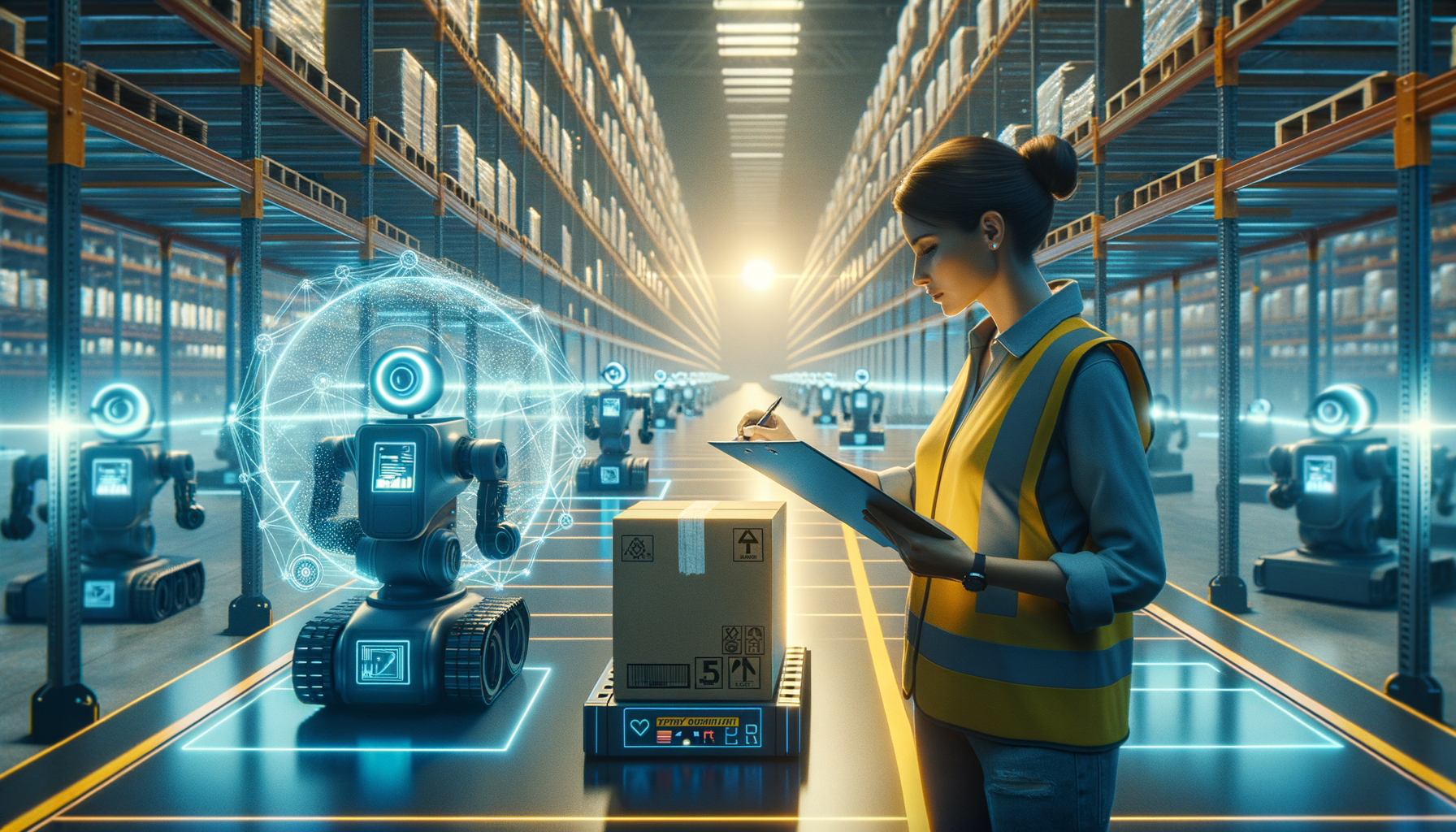
Robotics is creating entirely new categories of physical work. Amazon now operates over 750,000 robots across its warehouses. Headcount didn't shrink. It grew. The robots handle movement and sorting. The humans handle exceptions, maintenance, and the judgment calls machines can't make.
Human-in-the-loop is becoming the default pattern. AI handles volume. Humans handle stakes. A radiology AI can flag anomalies faster than any doctor. But it can't sit with a patient and explain what the flag means. The higher the stakes, the more the human matters.
None of this fits in a headline. "Jobs Are Changing Shape" doesn't generate the same engagement as "Jobs Are Dying." So the real story stays quiet.
The Prestige
In 2017, a team at Google published a paper. Eight authors. A new architecture for processing language. They called it "Attention Is All You Need."
That paper introduced the transformer. The transformer enabled GPT. GPT set off the wave that every headline is now riding. The entire AI revolution traces back to a research paper about attention.
The title was more accurate than they intended.
Attention is the scarce resource. Compute gets cheaper every year. The cost of running a large language model dropped over 100x between 2023 and 2025. Data is everywhere. Funding follows hype cycles. But the ability to look past the noise and see what's actually being built, that stays rare.
In the movie, the prestige costs the magician something real. The cost here is the same. Paying attention to what's actually changing means ignoring the narrative everyone else is consuming. It means watching deployment data instead of prediction reports. Tracking which jobs are being created, not just which ones are being threatened.
Three things worth watching that most people aren't:
The shift from AI-as-product to AI-as-infrastructure. The tools are disappearing into existing workflows. The standalone "AI app" is becoming less interesting than AI embedded in tools people already use.
The rise of physical AI. Software ate the world. Now AI is reaching into the physical world through robotics, autonomous systems, and sensor networks. Physical systems need human oversight at a scale software never did.
The human-judgment premium. As AI handles more routine cognitive work, uniquely human skills become scarcer relative to demand. Negotiation, empathy, ethical reasoning, creative direction. These aren't soft skills anymore. They're the hard ones.
Are you paying attention? Or are you just watching?
Pranoy Tez